for early access to the latest igaming videos!


 and get the latest igaming news first!










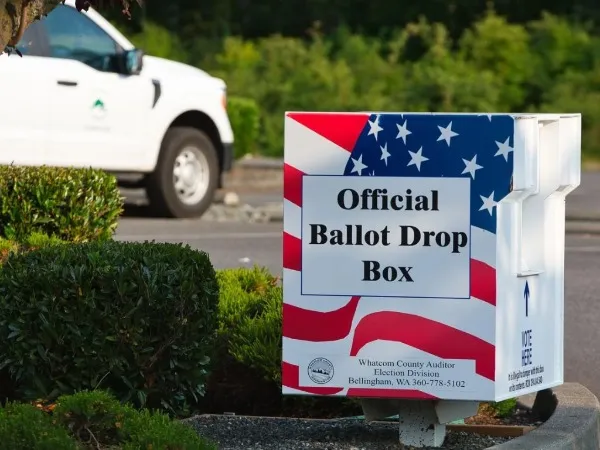
Ohio lawmakers are once again targeting prediction markets, this time with legislation that would prohibit betting on elections and other political contests in the state.
The measure, Senate Bill 479, introduced by Bill DeMora this month, would prohibit wagers on election outcomes and extend the restriction to prediction market platforms such as Kalshi and Polymarket. It’s his second attempt to regulate prediction markets, following SB 430 in April.
DeMora stated to NBC 4i that concerns about election integrity was at the centre of the legislation. “Anything that that is taking the reliability and people’s confidence away from election results is not a good thing, and I don’t think we should be betting on these outcomes,” he said.
If approved, Ohio would join 32 other states that already prohibit election betting in the US.
Ohio/prediction market battle gets latest update
The election betting proposal is only one part of a wider effort to bring prediction markets under Ohio’s gambling laws. DeMora has also argued, according to NBC 4i reports, that platforms such as Kalshi and Polymarket should face the same licensing and tax requirements as traditional sports betting operators.
The lawmaker argued that allowing prediction markets to continue operating outside Ohio’s gambling framework risks creating an uneven playing field. Licensed sports betting operators in Ohio currently pay entry fees ranging from $50,000 to $2.5m, depending on the licence type, while annual renewal fees can run into hundreds of thousands of dollars.
The debate comes as Kalshi seeks a rehearing after the 6th US Circuit Court of Appeals ruled that Ohio can regulate prediction markets under its gambling laws. Governor Mike DeWine has also backed that position, saying prediction markets are trying to avoid gambling rules despite operating in a similar way.
DeMora warned that if prediction markets continue outside the state’s betting framework, regulated sportsbooks could eventually seek the same treatment.
“If we don’t start regulating these these predictive markets like sports betting — because that’s what they are — then guess what?” he said. “The regulated sports betters are going to say, ‘OK, I’m no longer sports betting. I’m now a predictive market,’ and they’re going to stop paying taxes at all. And what’s that going to do to our budget?”
OGCC warns licensed operators, sets deadline for prediction market exits
While the battle continues in the courts and the Statehouse, Ohio regulators are pressing ahead with enforcement. Last week, the Ohio Casino Control Commission (OCCC) ordered sports betting and fantasy sports licensees to stop providing services to prediction market operators offering sports event contracts in the state by 30 October.
The directive extends beyond operators themselves and also covers suppliers, testing laboratories, integrity monitoring firms and other licensed businesses connected to Ohio’s gambling industry.
The move follows cease-and-desist orders sent to 10 prediction market operators earlier this month. Those companies were instructed to stop offering sports event contracts to Ohio residents by 16 October.
With that deadline set to expire tomorrow, the Commission has signalled that further action could follow against operators that continue serving the state. DraftKings, FanDuel and Fanatics all currently operate regulated sportsbook businesses in Ohio while also maintaining prediction market activities elsewhere.
Morrison, the OCCC’s interim executive director, warned that operators continuing to support “unregulated and unlicensed gaming through prediction markets, [it] may impact their future and ongoing suitability.”