for early access to the latest igaming videos!


 and get the latest igaming news first!










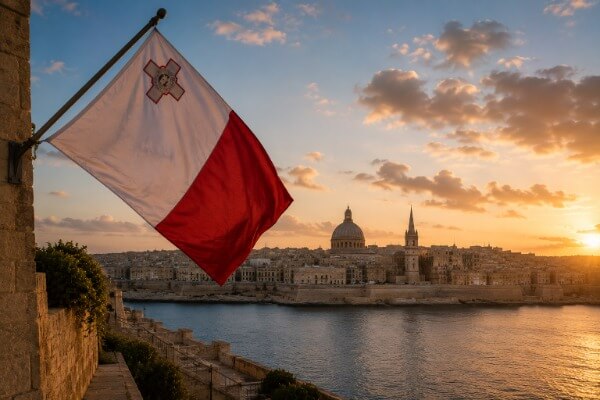
Europe’s securities watchdog has made one thing clear: changing the label on a product does not change what it is.
On 3 July, the European Securities and Markets Authority (ESMA) reiterated that contracts with binary outcomes remain binary options when they fall within the scope of MiFID II. Whether marketed as event contracts, prediction shares or forecast tokens is largely irrelevant. If the payoff is tied to subjects covered by Annex I of MiFID II, the instrument is treated as a derivative, meaning the EU’s long-standing retail restrictions on binary options continue to apply.
That clarification arrived just as Malta began moving in almost the opposite direction.
Economy Minister Silvio Schembri has confirmed the government is examining a dedicated legal framework for prediction markets, while Prime Minister Robert Abela has indicated the Malta Gaming Authority could eventually become the licensing authority for the sector. If implemented, Malta would become the first EU member state to establish legislation written specifically for prediction markets.
The proposal inevitably raises a broader regulatory question. Could prediction markets emerge as something distinct from both financial services and gambling—a standalone legal category?
It would not be the first time Malta has attempted exactly that.
A Familiar Regulatory Strategy
The country’s approach closely mirrors its crypto strategy from 2018.
At the time, digital assets did not fit neatly into existing European categories. Many tokens were neither electronic money nor conventional financial instruments. Rather than squeezing them into existing legislation, Malta created an entirely new legal framework through the Virtual Financial Assets (VFA) Act, establishing a bespoke licensing regime and promoting itself internationally as Blockchain Island.
For a period, the strategy worked from a branding perspective. Major crypto firms announced Maltese ambitions, and the country gained a reputation as Europe’s most crypto-friendly jurisdiction.
Regulation proved more demanding than the marketing suggested.
Although Binance publicly announced plans to establish itself in Malta in 2018, the Malta Financial Services Authority later clarified that the exchange had never received authorisation under the VFA framework and therefore remained outside the regulator’s supervision.
Ultimately, the European Union overtook Malta’s experiment.
The Markets in Crypto-Assets Regulation (MiCA) created a harmonised regulatory regime across all 27 member states, making separate national categories largely redundant. Malta stopped accepting new VFA licence applications during 2024, while the remaining transitional licences are due to expire this month, bringing the six-year lifecycle of the VFA regime to a close.
The experience was not without value. Malta’s supervisory expertise positioned it well once MiCA arrived, allowing firms including OKX to establish EU operations through the country. But the decisive legal definitions were ultimately written in Brussels rather than Valletta.
That history provides an obvious reference point for Malta’s latest regulatory ambition.
The Limits of a National Category
Prediction markets face two structural constraints that Malta cannot legislate away.
The first is European financial law.
ESMA’s recent communication emphasises that classification depends on how a contract functions rather than how it is marketed. Binary contracts linked to interest rates, inflation, commodities, freight markets, weather or other financial variables remain financial instruments under MiFID II regardless of domestic terminology.
That effectively limits any Maltese prediction-market framework to contracts outside financial regulation, such as elections, sporting events or entertainment.
The second obstacle is even more significant from a commercial perspective.
Unlike MiFID-regulated investment services, a uniquely Maltese licensing regime would not enjoy passporting rights across the European Union. Financial services benefit from harmonised legislation allowing authorised firms to operate throughout the bloc. Gambling regulation, although fragmented nationally, at least exists across every member state.
A sui generis Maltese category would exist only in Maltese law.
That means a platform licensed in Valletta could still face entirely different legal treatment elsewhere. French authorities, for example, would assess the product under French legislation rather than Malta’s bespoke framework, potentially viewing it as either unlicensed gambling or an unauthorised financial product.
Recent enforcement trends suggest that risk is far from theoretical.
Spanish authorities blocked access to Kalshi and Polymarket earlier this year over the absence of gambling licences, while regulators from nine European countries subsequently issued a coordinated statement warning against unlicensed prediction market operators serving European consumers.
National enforcement continues to rely on existing gambling and financial legislation, leaving little room for recognition of an entirely new Maltese classification.
Why Malta May Still Benefit
Those limitations do not necessarily undermine Malta’s strategy.
A dedicated framework could provide businesses with regulatory certainty, banking relationships and a recognised supervisory authority within one jurisdiction. It would reinforce Malta’s longstanding reputation for developing rules around emerging industries before much of Europe reaches a consensus.
Perhaps more importantly, it could position Malta to influence whatever comes next.
The crypto experience demonstrated that while national regulatory innovation may eventually be superseded by EU-wide legislation, practical supervisory experience can still shape later policy discussions. Jurisdictions that spend years licensing firms, collecting operational data and refining oversight often arrive at European negotiations with a level of expertise that others lack.
That advantage may ultimately prove more valuable than maintaining a permanent standalone regime.
If prediction markets eventually receive harmonised European regulation, the debate is likely to draw heavily on whichever member states have accumulated real-world regulatory experience first.
Malta appears willing to make the same wager it made with crypto: accept that Brussels may eventually absorb the framework, but secure an influential role in defining what that future framework looks like.
Whether that strategy succeeds again remains uncertain. What seems clearer is that Malta is not merely attempting to create another licensing regime. It is positioning itself to shape the conversation long before the rest of Europe decides how prediction markets should ultimately be regulated.
Source: financemagnates.com