for early access to the latest igaming videos!


 and get the latest igaming news first!










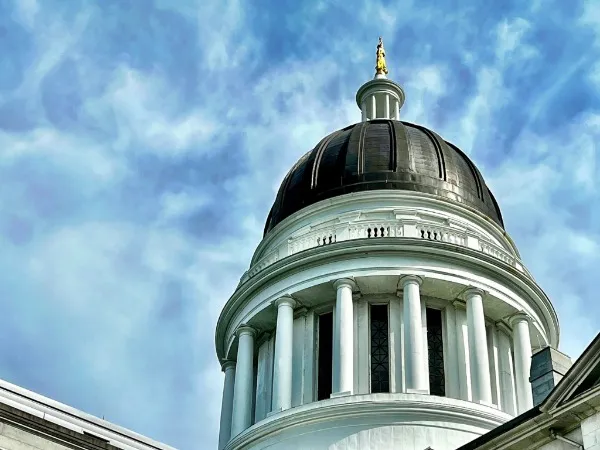
Maine could launch its regulated online casino market in the first quarter of 2027, although several key steps still need to be completed before operators can go live.
Speaking to SBC Americas, Milt Champion, Executive Director of the state’s Gambling Control Unit, said the timeline remains a target rather than a guaranteed launch date. Before online gaming can begin, regulators must finish the rulemaking process, build an online licensing portal and recruit six additional staff to oversee the new market.
Public comments on the proposed rules are due by 30 October, after which the regulations could move to the Attorney General’s Office for legal review if no major changes are required.
“As with sports wagering, iGaming is new, and the rulemaking process has followed in the same lengthy fashion as with sports wagering,” Champion stated.
The review by the Attorney General’s Office could take up to 120 days, and if it all goes smoothly, Maine would become the eighth US state with a legal online casino market.
What would a Maine iGaming market look like?
Earlier this year, Maine formally took its first step towards online casino gambling when Governor Janet Mills allowed LD 1164 to become law, giving the state’s four Wabanaki Nations exclusive rights to operate iGaming.
Under the law, the Mi’kmaq Nation, Houlton Band of Maliseet Indians, Penobscot Nation, and Passamaquoddy Tribes can each run online casino gaming through approved partners.
The latest proposed regulations, published on 30 September, provide a clearer picture of how the market could operate.
Players would need to be at least 21 years old and physically located in Maine to gamble online. Operators would be required to use geolocation technology, multi-factor authentication, and identity checks, while credit card deposits would be banned following a March bill.
The rules also include responsible gambling requirements, self-exclusion tools and restrictions on advertising aimed at younger audiences. The proposed framework would tax online casino revenue at 18%. This would place Maine well below Rhode Island’s 50% rate and mirror neighbouring Connecticut’s tribal iGaming model.
Caesars already in the door, more operators lurking
The regulations also open the door to a wide range of casino products, including slots, table games and live dealer games.
Suppliers, platform providers and content providers would all need licences, while operators would be required to keep player funds separate from company accounts and meet cybersecurity, auditing and reporting standards.
Commercial operators have already started positioning themselves. In June, Caesars Entertainment expanded its agreement with the Houlton Band of Maliseet Indians, the Mi’kmaq Nation and the Penobscot Nation to cover online casino gaming.
The partnership is expected to bring Caesars Palace Online Casino, Caesars Sportsbook & Casino and Horseshoe Online Casino to the state once the market launches.
Rush Street Interactive (RSI), BetRivers owner, also confirmed in January that it “could see a lot of success potentially partnering with a tribe” in the state.
However, not everyone has welcomed the tribal-focused model. Oxford Casino Hotel and its parent company have challenged the law in federal court, arguing that it effectively creates a monopoly. PENN Entertainment CEO Jay Snowden has also criticised the structure, saying it shuts out commercial operators and limits competition.
Even with this, Maine is looking all set to join Connecticut, Delaware, Michigan, New Jersey, Pennsylvania, Rhode Island, and West Virginia in the legal online casino market.