
 for early access to the latest igaming videos!


 and get the latest igaming news first!













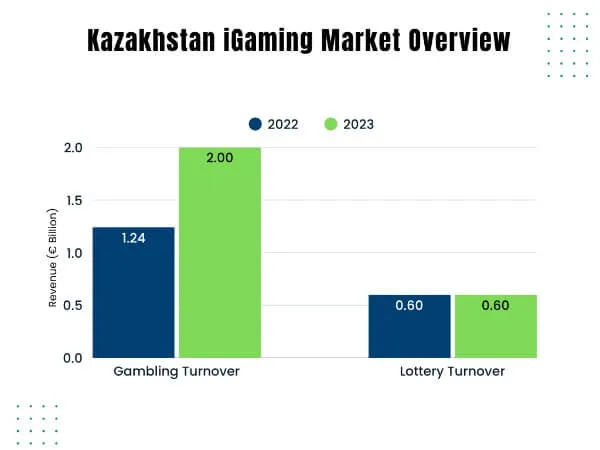
Kazakhstan, the largest country in Central Asia, very recently upsurged as a new leader in the iGaming market. Much has happened economically, digitally, and increasingly in demand for changing consumer habits and preferences. With over 18 million residents, the majority of whom are under 30 years old, there are opportunities for gambling, casinos, and the lottery. In recent years, the government of Kazakhstan has engaged the regulators with the attention towards modernising regulatory reform to align the gambling industry with global best practices regarding consumer protection, sustainable gambling, and technological advancement. The gambling sector has stabilised at a $1.24 billion turnover in 2022.
The gambling sector can be attributed to the Ministry of Culture as the leading regulator, as it continues to develop legal codes with a clampdown on compliance while already expanding commercial activities for gambling operators with legal changes that included the potential for gambling operating at hippodromes.
Market Overview
Market Growth and Size
Kazakhstan has one of the most vibrant gambling markets in all of Central Asia due to factors such as regulatory modernisation, rising disposable incomes, and a strong cultural attachment to gaming and sports betting. In 2023, the country’s total gambling turnover surpassed 1 trillion KZT (approximately $2 billion), demonstrating rapid expansion and significance to the economy. The turnover for 2022 gambling turnover was $1.24 billion, with $245 million collected in taxes by the state from licensed gambling operators. The turnover for the lottery alone accounted for nearly $600 million, demonstrating this market’s significance to the total sector turnover. The number of the active player base is estimated to be around 5 to 6 million, or just under 30% of the country’s population of 19.8 million.
Table 1: Kazakhstan Gambling Market Size and Key Metrics (2022-2023)
| Metric | Value | Notes |
|---|---|---|
| Total Gambling Turnover | $1.24 billion (approx. 1 trillion KZT) | Includes casinos, sports betting, lottery |
| Lottery Turnover | $599.8 million | Significant segment of the market |
| Number of Active Players | 5-6 million | Approx. 30% of population |
| Tax Revenue from Gambling | $245 million | Paid by licensed operators |
| Number of Licensed Casinos | 6 | Located in designated gambling zones |
| Number of Gambling Halls | 10 | Concentrated in special zones |
| Number of Licensed Bookmakers | 21 | Operate nationwide, including online |
| Number of Sweepstakes Operators | 8 | Licensed nationwide |
Major types of games available
The spectrum of gambling in Kazakhstan offers everything from land-based casinos to sportsbooks, online sportsbook betting, poker, lotteries, and a form of casino games. The most popular games include:
- Slots: Slots comprise most of the casino games and are extensively popular for the diversity of stories and big payouts, specifically in progressive jackpots.
- Table Games: Table games like roulette, blackjack, and baccarat largely established land-based and online casinos, and roulette and blackjack are especially popular for Kazakhstani players.
- Poker: Poker is legally considered a sport in Kazakhstan and is well known, with the availability of live poker tournaments, online tournaments, cash games, and poker professionals at well-known or major venues, like the Astana Poker Club and the Almaty Poker Centre.
- Sports Betting: Football and boxing hold the admiration of sports betting in Kazakhstan: a vast array of the gambling audience wager on either local or international wagering events.
- Lottery: The annual turnover for the lottery is about $600 million, which employs thousands nationally. There are multiple lotteries.
- Other games: Live dealer games, dice games, bingo, and instant-win games are other games experienced that players like to try.

Table 2: Popular Game Types and Player Preferences
| Game Type | Popularity Level |
|---|---|
| Slots | Very High – Most popular casino game; includes jackpots |
| Table Games | High – Includes roulette, blackjack, baccarat |
| Poker | Moderate – Recognized as a sport: live and online events |
| Sports Betting | Very High – Football and boxing are top sports |
| Lottery | High – Robust segment with significant turnover |
| Live Dealer Games | Growing – Increasingly popular for immersive experience |
| Other (Bingo, Dice, Instant Win) | Moderate – Cater to niche player segments |
Demographics of Players
In Kazakhstan, other than social gambling, the gambling audience primarily resides with adults 18 and older, as the legal age for gambling is set at 21 for most gambling activities. The estimated player audience of 5-6 million is also split reasonably evenly by gender, with a 30% limitation due to cultural and religious beliefs. Demographically, most of the player population (87%) is young and under the age of 35, which reflects the fact that, as a country, Kazakhstan has many young adult consumers and relatively high rates of acceptance of digital platforms.
Younger players are particularly attracted to mobile and digital gambling, as they commonly are with various digital platforms given the convenience and variety offered on these platforms. Preferences vary, but slots, table games, and sports betting have always been mentioned as favourites. The popularity of international gambling sites remains strong with younger players, even as Kazakhstan does continue to regulate these platforms to encourage domestic licensed gambling options, especially ones that have higher payouts, larger selections of games, etc.


Table 3: Player Demographics
| Demographic Attribute | Percentage / Description |
|---|---|
| Age Group | Majority under 35 years old |
| Legal Gambling Age | 21+ years |
| Gender Distribution | 54.4% Male, 45.6% Female |
| Mobile Gaming Share | 91.8% Android users |
| Player Base Size | 5–6 million active gamblers |
| Cultural Notes | ~30% of the population abstains due to religion or personal choice |
Regulatory Landscape
Overview of Existing Gambling Regulations
This article was updated on April 23, 2026.
Kazakhstan maintains a strict and evolving system for gambling regulation, prioritized around compliance, consumer protection, and responsible gaming. The industry is categorized by high levels of state oversight. Historically, land-based casinos and slot halls were confined to only two designated gambling zones: Konayev (formerly Kapchagay) in the Almaty region and Shchuchinsk in the Akmola region.
However, as of early 2026, the government has approved the creation of four new tourist-only casino zones located in the Mangystau, Zhetysu, Almaty, and East Kazakhstan regions. These new zones are exclusively for international tourists, while the original two zones remain open to both locals and foreigners. Bookmakers and sweepstakes (totalizators) are permitted to operate nationwide, including online, provided they hold a valid state license.
The industry is governed by the Committee for the Regulation of Gambling and Lottery Activities under the Ministry of Tourism and Sports. This body possesses wide enforcement and rule-making authority. Since 2024, the government has intensified its crackdown on illegal gambling, adding over 10,000 websites to cyber-surveillance blocking lists. Furthermore, the list of individuals prohibited from gambling has significantly expanded to include civil servants, military personnel, heads of budget organizations, and, since mid-2025, individuals sentenced to probation or restriction of liberty.
Table 4: Licensing and Regulatory Requirements
| Requirement | Details | Requirement | Details |
|---|---|---|---|
| Licensing Authority | Committee under the Ministry of Tourism and Sports | License Types | Casinos, Slot Halls, Bookmakers, Sweepstakes |
| Geographic Restrictions | Casinos/Slots in 2 original zones (all) + 4 new zones (foreigners only) | Company Registration | Local company with a physical office and local servers required |
| Capital Deposit | Minimum 25,000 MCI (approx. $250,000 based on 2026 MCI) | License Fees | Indexed annually; paid to the state budget |
| Compliance Standards | AML, CFT, responsible gaming, age verification, debt register checks | License Processing Time | Approximately 15 working days |
Licensing Requirements and Regulatory Bodies
To operate legally, all gambling entities must obtain a license from the Ministry of Tourism and Sports. The criteria for applicants include:
Corporate Presence: The applicant must be a locally registered company with a physical office and qualified management.
Financial Integrity: Must meet strict Anti-Money Laundering (AML) and Counter-Financing of Terrorism (CFT) requirements, including robust internal controls and mandatory customer verification (KYC).
Security Deposit: A mandatory deposit into a local bank account is required to ensure financial stability (minimum 25,000 MCI). For 2026, the Monthly Calculation Index (MCI) is set at 4,325 tenge.
Documentation: Extensive documentation must be provided, including technical specifications of equipment and proof of local server hosting for online betting.
Details on Taxation and Compliance
Taxation in the gambling sector underwent a major overhaul effective January 1, 2026, with the introduction of the new Tax Code. The Corporate Income Tax (CIT) for gambling businesses has been increased to 25% (up from the previous 20%). The standard VAT rate has been adjusted to 16%.
Licensed operators in special zones continue to benefit from certain land and property tax exemptions to incentivize regional development. Annual license fees remain mandatory and must be paid before January 20th of each year.
Table 5: Taxation and Fees (Updated 2026)
| Tax/Fee Type | Rate / Amount | Notes | Tax/Fee Type |
|---|---|---|---|
| Corporate Income Tax | 25% | Increased for gambling and banking sectors in 2026 | VAT |
| VAT | 16% | Standard rate applied to turnover | Gambling Tax |
| Gambling Tax | Fixed monthly rates | Calculated per table/machine/betting office | Land/Property Tax |
| Land/Property Tax | Exemptions available | Only for authorized facilities in special zones | Annual License Fee |
| Annual License Fee | 640 MCI – 3,845 MCI | Dependent on activity type (e.g., Bookmaker vs. Casino) |
Upcoming and Recent Changes in Legislation
The legal framework continues to tighten to mitigate social harm and increase state revenue:
Advertising Ban: Since mid-2025, gambling advertising is strictly prohibited on streets, building facades, vehicles, and most digital platforms. Exceptions are limited to official websites of licensed operators, sports-specific media, and during international sports broadcasts.
Prohibited Participants: The ban now includes over 3.5 million people listed in the Unified Register of Debtors, as well as persons under probation or suspended sentences.
Lottery Restrictions: Lottery ticket sales are now banned within 100 meters of residential, religious, cultural, and social facilities.
Criminalization: Operating an online gambling site (other than licensed sports betting) carries heavy criminal penalties, including up to two years of imprisonment.
Cryptocurrency: While a “CryptoCity” pilot zone has been launched for general digital assets, the use of cryptocurrency for gambling remains largely restricted and outside the legal framework for licensed operators.
Table 7: Recent and Upcoming Regulatory Changes
| Change Description | Effective Date / Status | Impact on Market | Change Description |
|---|---|---|---|
| New Tourist-Only Casino Zones | March 2026 | 4 new regions opened for foreign visitors to boost tourism revenue. | Increased CIT to 25% |
| Increased CIT to 25% | Jan 1, 2026 | Higher tax burden on operators under the new Tax Code. | Total Advertising Ban |
| Total Advertising Ban | June 2025 | Most outdoor and digital ads are now illegal; fines up to 1.5M tenge. | Expanded Exclusion List |
| Expanded Exclusion List | Ongoing (2025/2026) | Includes debtors and those with non-custodial criminal sentences. | Centralized Betting Systems |
| Centralized Betting Systems | In Progress | Mandatory integration with state systems for real-time tax monitoring. |
Competitive Landscape
Kazakhstan’s gambling market is characterised by a blend of established local operators and growing international brands, which demonstrates the country’s strategic position as a multi-gaming hub in Central Asia. As of 2022, there were 6 licensed casinos, 10 gambling halls, 21 bookmakers, and 8 sweepstakes operators in the market, with a total gambling sector turnover of approximately $1.24 billion. The state collected $245 million in tax revenues from these operators, illustrating the market’s economic importance.
Key Market Players
Some of the largest participants in the Kazakh sports betting and online gambling market include local leaders, such as Olimp.bet, which contributed nearly 59.1 billion KZT ($130 million) in taxes in 2022, followed closely by 1xBet.kz with 30.3 billion KZT, and Alpha-bet, which made the tax payment of 7.4 billion KZT. These brands possess strong brand awareness and customer bases, with significant percentages of players serviced through a combination of other gambling operators with relatively better odds and betting market services that are localised. The casino market tends to be smaller but stable in revenue contribution, and licensed casinos only exist in designated gambling zones, of which Kapchagay and Borovoe are a popular zone used.
International operators have begun taking notice of Kazakhstan and its growing gaming market, spurred on by a variety of new regulations and government initiatives to promote various new gaming zones, including plans to locate near the Chinese border to attract foreign tourism. However, Kazakhstan has put a strict licensing regime in place and begun actively blocking unlicensed foreign platforms, and as a result, the market share of illegal offshore operators is constrained, although they still represent a sizeable share of the market given the fact that online casinos continue to be banned.
Market Share Distribution
The market is very highly skewed towards online sports betting, which represents more than half of the total turnover of gambling. Land-based casinos and slot halls continue to represent the smaller portions of total turnover for gambling, with player spending in physical locations reported to be 26.4 billion KZT in 2022. Despite the initiatives on the government side to curb it, illegal online gambling represented up to 80% of all gambling operations, removing significant amounts of revenue from the legitimate market.
Table 6: Market Share and Key Operators (2022)
| Operator Name | Segment | Estimated Tax Contribution (KZT) | Market Position / Notes |
|---|---|---|---|
| Olimp.bet | Sports Betting | 59.1 billion (~$130 million) | Market leader with largest tax payment |
| 1xBet.kz | Sports Betting | 30.3 billion (~$67 million) | Strong competitor with wide market reach |
| Alpha-bet | Sports Betting | 7.4 billion (~$16 million) | Growing presence |
| Licensed Casinos | Casino | N/A | 6 casinos in restricted zones |
| Gambling Halls | Casino | N/A | 10 halls operating in special zones |

Partnerships and Strategic Alliances
In order to navigate the complex regulatory environment and enhance market coverage, local operators will often enter into partnerships with international technology providers and payment solution companies. These partnerships will enable local operators to access advanced gaming platforms, mobile applications and secure payment methods, including emerging digital wallets and cryptocurrencies. Similarly, we see many partnerships with sports federations and event organisers – especially in the sports betting area – to demonstrate legitimacy and opportunities for bet offerings.
Kazakhstani government initiatives to establish new gaming zones and related infrastructure will create additional opportunities for partnerships between operators, hospitality groups, and authorities to promote tourism and legal gambling tax revenues.
Consumer Trends
Kazakhstan’s iGaming consumers are young, tech-savvy, and increasingly mobile. Most of the heavy online gaming audience is under 35 years old, and the gender split is almost even. Also, players exhibit a strong preference towards online slots and jackpot games, as well as live dealer tables, further emphasising their desire for an immersive and fun user experience. Sports betting remains extremely popular and players are interested in sports betting for large events (i.e., national football leagues) but also for more localised sporting events like football and basketball.
While consumers are dominant on mobile, we have learnt that almost 90% of users are playing online gaming platforms on Android devices, indicating a high demand for mobile-friendly websites and applications. Players are also moving their payment preferences from traditional credit/debit options to more fintech options such as digital wallets, bank transfers, and even cryptocurrencies (to a lesser extent).
Opportunities & Challenges
Kazakhstan has a distinct opportunity for growth for new entrants, particularly in the online and mobile sectors, due to its youthful demographic, connected population and developing disposable income, which supports new and disruptive iGaming products and services. There is also potential differentiation available to operators due to the Government’s openness on technological advancements, i.e., blockchain and digital payments, which will also allow operators to be more transparent and secure in their operations on top of the existing international regulations.
However, the regulatory complexity of the gambling space remains an inhibiting factor since operators will need to comply with strict licensing procedures, compliance functions and regulatory legislative changes. The Government will seek to block unlicensed operators, which could create compliance disruption for operators that will need increased internal controls to comply with responsible gambling obligations.
The sheer number of new operators entering the gambling space makes for increasing competition as new resources and products; established operators are innovating on existing offerings, and customers are being attracted through new differentiation in marketing and customer experience. Operators must also be aware of regulatory compliance, especially as the political environment could include changes to areas such as advertising, engagement or changes in defining legal ambiguities such as NFTs or cryptocurrencies.
There is increased competition and therefore it will be more important than ever that operators enter into strategic partnerships, explore the local market for its insights, take ownership of their regulatory responsibilities for compliance, invest in compliance infrastructure and approach these expectations with a long-term mindset.
Conclusion & Recommendations
Kazakhstan’s iGaming sector is growing at a rapid pace due to regulation changes, digital evolution, and a youthful cohort of active players with a good deal of energy and enthusiasm. The $1.24 billion turnover of the sector in 2022 demonstrates significant economic clout but also the potential capacity of the sector to grow. Recent regulatory changes impacting technology and how operators can compete present both positive and negative implications, as well as the potential to innovate and expand into the market.
In looking at Kazakhstan’s iGaming sector from an operator or investment perspective, ultimately success will revolve around the licences you secure, ensuring compliance, and matching offers and experiences to local consumer demands. A reasonable investment in mobile, digital payments, and responsible gambling that meets consumer expectations will be critical to gaining market share and trust over time. Local partnerships will support market entry and regulation.
Future Outlook For the iGaming Sector in Panama
In the short term, sector development will depend on the government’s continued focus on responsible gaming, advancing technology and market oversight. Stakeholders who adjust to maintain compliance, incorporate new technologies, and make competitive offers will profit the most from Kazakhstan’s emerging iGaming opportunity.
Data and Sources:
- 4H Agency: Kazakhstan Gambling Market Report, March 2025
- 6Wresearch: Kazakhstan Gambling Market (2020-2026), June 2023
- Trends and Prospects: Development of the Gambling Industry in Kazakhstan, February 2024
- Linkedin: New Changes in the Regulation of the Gambling Market in Kazakhstan, June 2024
- Eventus International: The Asian Gaming Market is Gaining Momentum, January 2025
- The Diplomat: A Trojan Horse? The New Kazakh Gambling Legislation Needs a Closer Look, May 2024
- JGK – Journal of Gambling Issues: Gambling in Kazakhstan: Seeking a Balance Between Economic Benefits and Social Risks, March 2025 (PDF)


