
 for early access to the latest igaming videos!


 and get the latest igaming news first!













The two main reasons are that the Israeli population of just under 9.8 million people is highly connected (over 90% penetration) to the internet, which creates an interest for its citizens in digital entertainment. The iGaming sector is an unregulated market that exists due to its underground scale (estimated at over $3.5 billion per year) through access to unlicensed sites from offshore sources and domestic requests for casino games, sports betting, and lotteries. The government continues to take measures to block access to unlicensed gambling-related websites as part of the 2017 “Powers to Prevent Offences Through an Internet Site” law, and continues to believe in the effectiveness of VPN services to circumvent legal restrictions and enable offshore operators to continue to participate in the Israeli market. However, there was no significant liberalization of regulation in 2025, and reports have indicated growth in the adoption of online gambling during difficult economic conditions after the regional tensions experienced in 2024. Additionally, there are a number of proposals for a casino in Eilat and potential reforms that the stakeholders are looking towards, but continue to experience significant opposition from groups of religious people.
Market Overview
In the gambling market in Israel, there is a clear divide between tightly regulated government-operated businesses and an enormous illegal and/or offshore betting industry. Legal revenue is derived from Mifal HaPayis (the national lottery) and the Israeli Sports Betting Board (ISBB), while the illegal market, which includes a high number of online/ offshore betting sites, generates billions of dollars in annual revenue. Although data access is limited due to regulatory restrictions, recent estimates indicate high levels of growth potential as a result of digitalization.
Table 1: Market Overview
| Segment | Revenue Estimate | Growth Rate | Player Notes |
|---|---|---|---|
| Lottery (Mifal HaPayis) | ~$1.4B (historical peak) | Steady | High participation |
| Sports Betting (ISBB) | $265B (2024 proj.), $468B by 2032 | 10.38% CAGR | |
| Offshore / Illicit | $3.5B+ annually | Digital-driven |
Market Size & Growth
NIS 5 billion (~$1.4 billion USD) was the legal lottery revenue in 2012, and $ 2.9 billion (14% YoY increase) in the first half of 2013; current estimates show that revenue will remain stable over the long term as a source of funding for public service. ISBB has been estimated to have generated $265.76 billion USD in 2024 (there may be discrepancies in the number of units reported, as well as the value forecasted); however, ISBB’s future growth rate from 2025 onward is estimated at an annual rate of 10.38%, which will result in revenues exceeding $468.55 billion USD by 2032. An estimated $3.5 billion USD is generated annually by illegal gaming operations, originating in offshore casinos and online betting operations; estimates of total revenues from illegal gaming operations in 2025 cannot be accurately made until enforcement is established.
Table 2: Market Size Summary
| Metric | Legal Market | Total (incl. Illicit) |
|---|---|---|
| Revenue 2025 Est. | ~$2B | $4–5B+ |
| Players | Unknown | ~2.4M heavy gamers |
| CAGR to 2031 | N/A | Projected growth |
Player numbers remain elusive legally, but heavy online gamers total ~2.4 million (28% of Israel’s 8.5 million population), indicating massive underground participation. Growth drivers include mobile penetration and sports enthusiasm, projecting steady expansion through 2031 despite bans.

Popular Game Types
The legal avenues prioritized by lottery sales (e.g., Lotto raised NIS 777 million in the first half of 2013), as well as by betting on sporting events, predominantly the sport of soccer through the monopoly of ISBB. The offshore gaming platforms are leading in the gaming vertical of casino games, including Slots, Poker, live dealer Blackjack and Roulette, as well as Instant Win games and Esports/Non-Sport Betting.
- Lottery: State-exclusive, high participation for jackpots.
- Sports Betting: Soccer-focused, 21% margins for ISBB.
- Casino/Poker: Offshore staples, with Hebrew-localized live games.
- Emerging: Esports, driven by youth tech culture.
Player Demographics
According to the survey results, younger and male players dominate the majority of active users on gaming platforms, with 52% of users under 24 years old, 25.4% between 25 and 34 years old, and 68.6% male. Players tend to prefer playing on a mobile device rather than on a desktop computer (mobile 75% Android), engage with interactive casino games/esports as opposed to playing through traditional lotteries and due to changes in cultural values; Urban youth are using Virtual Private Networks (VPN) to get around filtration on content while this is less common within older conservative player populations.
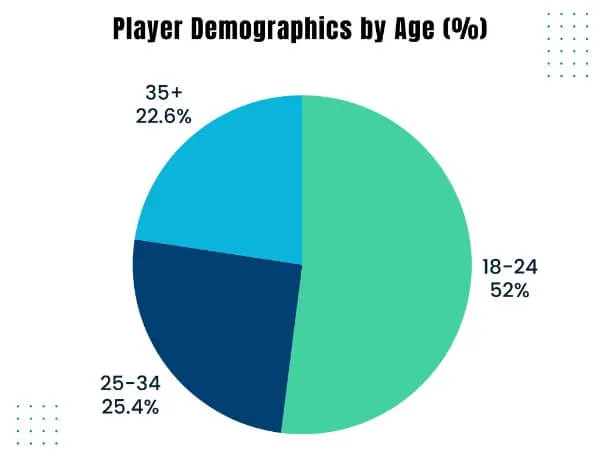

| Demographic | Share | Preferences |
|---|---|---|
| Age 18–24 | 52% | Mobile casino, esports |
| Age 25–34 | 25.4% | Sports betting, poker |
| Male | 68.6% | Live dealer, slots |
| Android Users | 75.4% | Offshore apps |
This overview highlights a market ripe for offshore innovation, with legal constraints amplifying illicit activity—totaling a potential $4-5 billion or more in 2025 equivalents.
Regulatory Landscape
The religious, cultural, and social norms of providing for social welfare over liberalisation drives Israel to impose some of the world’s most restrictive gambling controls. Following the prohibitive requirements of Penal Law Chapter 12 (5737-1977), Israel effectively prohibits (with only limited exceptions for government state operated gambling activities) all gambling, bonus gaming, lotteries, wagering, betting and chance games; it has therefore established a marketplace that consists of two parts: Government Monopolistic Operations and Unlicensed Illegal Operations (or “Black” Market).
Table 4: Regulations Overview Table
| Category | Status | Exceptions |
|---|---|---|
| Casinos / Poker | Banned | None |
| Online Betting | Illegal (except ISBB) | State monopoly |
| Lotteries | State-only | Mifal HaPayis |
Overview of Existing Gambling Regulations
According to the Penal Law (APL; 5756288/73), all commercial gaming activities, including but not limited to poker rooms, and most online wagering, as well as ancillary services such as venues or equipment, are prohibited under criminal law. The following exemptions apply to the health care system:
- A National Lottery (Mifal HaPayis), as outlined in Section 231(A) of the APL;
- Sports Wagering Through the Israel Sports Betting Board (ISBB/Toto Winner), as outlined in the Sports Betting Act of 5727-1967 (No. 5756284/72);
- Certain Forms of ‘Social Gaming’ (i.e., Non-Commercial/Low Stakes);
- Online Gaming is NOT ALLOWED, except for the `ISBB’S’ online wagering products;
- The 2017 Internet Site Offender Prevention Act (Law No. 5756447/78) permits ISPs to block access to unlicensed sites; however, VPNs provide a means for circumventing such restrictions.
Penalties for organizing and/or participating in illegal gaming activities are considerable. In the case of an organizer and/or a participant, a sentence of three (3) years’ imprisonment and/or a fine of ILS 452,000 (approximately $120,000) applies. A penalty of one (1) year and/or a fine of ILS 29,200 (approximately $7,800) applies to the participant. Money laundering ties to organized crime increase the degree of risk under the Prevention of Money Laundering Act of 2000.
Licensing Requirements and Regulatory Authorities
There are no private licenses available; only state licenses issued to Mifal HaPayis (valid for five years and overseen by the Ministry of Finance) and Permanent ISBB approval (ISBB). Self-regulation of betting programs is performed by ISBB. Enforcement of breaches of the regulations is shared between the Israel Police, State Attorney, Ministry of Finance, and courts for enforcement/blocking/fines. Transactions involving gambling are prohibited by the Bank of Israel.
Taxation and Compliance Details
Sums above ILS 33.84k (approx. $9k) – the inflation adjusted amount from ILS 30.5k in 2019 for the non-resident winners – have a final taxation of 25% with no deductions/credits/losses for either residents; state entities (e.g., Lottery) receive income from ticket charges to fund public services and related projects; attempting to avoid tax through offshore accounts will create complications with compliance and increase the chances of an audit or prosecution.
Table 5: Penalties and Taxation
| Violation | Penalty | Tax on Winnings |
|---|---|---|
| Organizers | Up to 3 years prison or ILS 452,000 fine | 25% on winnings over ILS 33,840 |
| Participants | Up to 1 year prison or ILS 29,000 fine | Final tax, no loss offsets |
Upcoming Legislative Changes
The Eilat casino proposals, which were revived in 2016 to increase tourism, are still in the planning stage due to opposition. While Supreme Court justices have suggested stricter enforcement of online gambling, live betting, and poker are still sites of contention with some legislators. Many measures presented by the Ministry of Monitoring include limitations or exemptions for local governments and religious organizations.
| Aspect | Key Details | Authority |
|---|---|---|
| Bans | Casinos and online gambling (except ISBB) | Penal Law, Chapter 12 |
| Penalties | Up to 3 years prison or ILS 452,000 fine (organizers) | Courts / Police |
| Tax | 25% on winnings above ILS 33,840 | Income Tax Order |
| Blocks | ISP blocking warrants in force since 2017 | Internet Site Law |
This regime safeguards society but drives underground markets, challenging operators while protecting state monopolies.
Competitive Landscape
The competitive landscape of iGaming in Israel is primarily controlled by the State’s legal channels as state-owned monopolies. The grey market, however, is dominated by both offshore international operators and Israeli technology exporters, taking up an estimated $3.5 billion in activity each year in a criminal environment due to strict prohibitions against any domestic player operating in this space. Ultimately, the technology and software created by domestic innovators are creating a global impact.
Key Market Players
Local/State Operators:
- Mifal HaPayis: Monopoly on lotteries, ~NIS 5B revenue (2012), funding public projects.
- ISBB (Toto Winner): Exclusive sports betting, high margins despite competition.
Offshore International:
Popular among Israelis: BetPanda (600+ live games), CoinCasino ($30K bonuses, crypto), 1xBet, Dafabet—Hebrew/Shekel support.
Israeli Tech/Global Exporters:
- Playtika, Spinomenal: Casino software, social/mobile games.
- Impala Digital: Betting platforms for Africa/Europe.
- LuckyStreak: Live dealer B2B solutions.
- Playtech (Israeli founder): International giant.
Table 7: Key Players
| Type | Players | Role |
|---|---|---|
| State | Mifal HaPayis, ISBB | Fully legal operators |
| Offshore | CoinCasino, BetPanda, 1xBet | Illicit market leaders |
| Tech Export | Playtika, Spinomenal | Global iGaming software providers |
Market Share Distribution
Illegitimate; therefore, the division: Lottery, $60-70% of the estimated $2 Billion. Betting: 30-40% of the estimated $2 Billion.
An estimated 90%+ of the total volume ($3.5 Billion+) is being captured from illegal and offshore sites (with the top 10 sites, CoinCasino receiving the most amount of reviews and ratings). The estimated global software market share for Israeli exporters is between 5% to 10% indirectly.

Table 8: Market Share Distribution
| Segment | Dominant Players | Est. Share |
|---|---|---|
| Lottery | Mifal HaPayis | 100% legal |
| Sports Betting | ISBB | 100% legal, low margins |
| Offshore Casino | CoinCasino, BetPanda | 90%+ illicit |
| Software | Playtika, Spinomenal | Global export |
Partnerships and Strategic Alliances
- None of the private states operates in a legal environment; All of them are self-contained states. Letter company partners with Israeli fintech companies to build an ecosystem for crypto and wallets (i.e., using Tel Aviv companies to provide compliance/blockchain support).
- Tech alliances: Merger of NSIN and NSI (2022) to create a iLottery/sports betting industry leader; Deals between platforms, such as LuckyStreak, are B2B operations.
- Key trends include the growth of fintech and iGaming as a source of financial transactions while avoiding traditional banking institutions.
Thus, the high barriers to entry into the fintech and iGaming industries favour entrenched offshore companies and established technology businesses, while Israeli innovation is the dominant player providing back-end operations. This creates a situation where stakeholders are being positioned for global markets rather than domestic markets.
Consumer Trends
In Israel, consumers of online gaming are restricted by government regulations, but still take risks through offshore gaming to gain enjoyment from gambling and make money. In Israel, 46.2% of all adults have participated in gambling in the last twelve months, with the majority participating in high-engagement activities, risking problem gambling. The top two reasons for participating in gambling are financial gain and excitement.

Table 9: Demographics Table
| Group | % Share | Preferences |
|---|---|---|
| 18–24 Males | 52% | Esports / mobile |
| 25–34 | 25.4% | Poker / sports |
| Android Users | 75% | Offshore apps |
Player Behavior and Preferences
Younger players tend to be very impulsive, as they are more likely to engage in quick-hitting mobile slot games and esports, while older players tend to bet on soccer and play poker. The online gaming community consists of roughly 2.4 million active customers who prefer to play against real-life dealers in interactive live games (including esports) instead of traditional lottery formats. Revenues for action and strategy games account for roughly 17-20% of total online game revenue. There is a growing trend toward hyper-casual social gaming formats, and it is believed that this could lead to increased gaming addiction. Legislators across Europe are beginning to look at implementing regulations to help protect gamers.
- Monetary pursuit: Highest frequency driver.
- Thrill-seeking: Secondary, youth-led.
- Mobile-first: 75% Android, instant access.
Payment Methods and Technological Trends
Banks block gambling; players use crypto (Bitcoin/Ethereum/Litecoin for privacy/speed, bonuses), Visa/Mastercard (instant deposits), e-wallets. VPNs are essential for offshore fintech innovations enable seamless evasion. Tech: Mobile boom (54% CAGR gaming), AR/VR potential amid 90%+ penetration.
Table 10: Trends and Influences
| Trend | Key Driver | Cultural Impact |
|---|---|---|
| Crypto / VPN | Bank blocks | Youth evasion |
| Mobile Growth | Tech affinity | 54% CAGR |
| Religious Stigma | Jewish norms | Illicit surge |
Social and Cultural Influences on iGaming
The Jewish faith’s perspective on gambling as a form of leisure has led to many states placing an outright prohibition against gambling. This has been compounded by the adverse stigma associated with gambling. However, an emerging trend has developed among teenagers to gamble anonymously through the digital medium. This has created an inherent conflict between Judaism’s religious prohibition against gambling, which has impeded a push towards reform. At the same time, the ongoing addiction crisis resulting from gambling addiction has negatively impacted local communities. This conflict between the religious beliefs of its adherents and the rapidly changing global environment has led to an increase in youth participation in irresponsible forms of gambling performed through digital media. As a result, there is a demonstrated need for innovation to be developed responsibly.
Opportunities & Challenges
For innovative offshore growth opportunities, the potential for integrating cryptocurrency and developing Hebrew-localized platforms, as well as virtual reality and mobile esports experiences for tech-savvy youth, represents a significant target market as the global market continues to expand through 2031. New businesses are able to take advantage of the $3.5 billion illegal market by either investing in affiliate programs or establishing a payment gateway.
Despite the immense potential of the market, new entrants will face several obstacles, including strict laws and regulations (e.g., site blocking by authorities, fines), as well as cultural and religious obstacles to gambling and affiliation, and concerns about gambling addiction without any effective regulations controlling it.
Currently, new entrants are challenged by significant operational costs related to evading law enforcement. Banks will continue to block payments to offshore gambling sites, and the lack of legal access to offshore sites will hinder local opportunities. Although blockchain technology may help alleviate some of these obstacles to new market entrants, the established linkages between organized crime and online gambling may still present a serious risk for new entrants into the online gambling industry.
Conclusion & Recommendations
Israel’s iGaming remains bifurcated: state monopolies thrive legally, while offshore/underground dominates volume amid bans. Key takeaways: robust demand despite restrictions, youth-driven digital shift, persistent regulatory hurdles.
Operators should prioritize offshore compliance with VPN/crypto, Hebrew localization, and responsible tools for entry. Investors: monitor Eilat reforms, fund tech (ARPU KPIs). Future outlook: gradual liberalization unlikely in the short term, but online growth persists through 2031.
Data and Sources:
- 6W Research: Israel Gambling Market forecast 2025-2031,
- Globes English: National Lottery revenue reports (historical),
- GamesHub: Best Online Casino Israel 2026, offshore operators,
- Herzog Fox & Neeman via Beaumont: Israel Gambling Laws & Regulations 2024,
- ICLG: Gambling Laws and Regulations Report 2026 Israel,
- Wikipedia: Mifal HaPais lottery details,
- Data Bridge: Israel Sports Betting Market to 2032,
- Start.io: Heavy Online Gamers in Israel demographics,
- Chambers: Gaming Law 2025 Israel guide,
- Ensun: Top 77 Gambling Companies in Israel 2025,
- Jerusalem Post: Betting with Bitcoin 2025 iGaming shift,
- PMC/NCBI: Gambling behaviors in Israeli adults study 2025,
- Casinolandia: Best Payment Methods Israel casinos,
- Times of Israel Blogs: Betting crisis in communities,
- VINnews: Israel’s betting laws unchanged


