for early access to the latest igaming videos!


 and get the latest igaming news first!










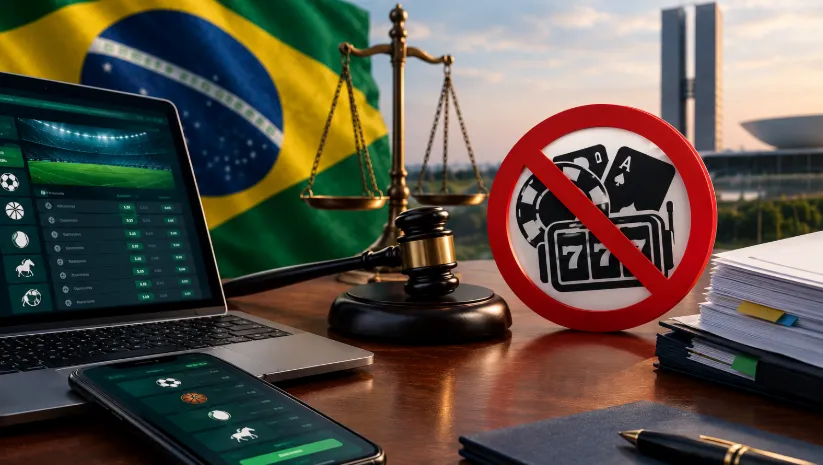
Brazil’s decision to ban fixed-odds betting across the country has been criticized by the Brazilian Institute for Responsible Gaming (IBJR), the Brazilian Association of International Gaming Operators and Suppliers, and ABRAJOGO. Both organizations say the PM 1394/2026 is incompatible with the regulatory regime provided by the federal government and is uncertain for enterprises that are authorized to operate in the country.
The bill, which was signed on September 25, 2026, bans the use, promotion, mediation and marketing of fixed-odds betting, such as sports betting, online casino games and more. The IBJR said the ruling was a “rupture of the regulatory structure created by the Brazilian State itself,” as the sector has been federally authorized and supervised since January 2025.
IBJR Warns of Illegal Market Growth and Revenue Losses
The IBJR cautioned that the ban could push consumers to alternative sites. According to LCA Consultoria, based on data provided by the Instituto Locomotiva, the figure for online betting on illegal platforms is already between 38% and 44% and will reach an estimated 41% to 51% in 2025.
The study estimates that between R$58 billion and R$73 billion in tax revenues would be lost between 2027 and 2030, depending on the amount of demand that will turn to the black market as a result of the ban. The IBJR also said that players on unofficial platforms would not benefit from the same safeguards as provided by the official platforms, including identity verification, transaction monitoring, self-exclusion and responsible gambling tools.
Legal Uncertainty and Licensing Costs
The IBJR also pointed out the possible legal and financial ramifications for the federal government. The organization said operators spent money on infrastructure, on hiring staff, on signing contracts, and paying licensing fees, following the regulatory requirements. Estimated government liability, just for licenses, at least R$2.55 billion.
The institute advocated more regulation and enforcement, not not allowing the market to exist. It also claimed that the gambling industry’s potential impact on the finances is wider than simply the gambling sector, since it also supports public areas like public security, education, social security, tourism and sports.
ABRAJOGO Raises Concerns About Regulatory Stability
ABRAJOGO also claimed that the ban would compromise legal certainty for companies that had planned their business around rules laid down by the government. The sudden turnaround could impact not just the betting firms, but also their staff, suppliers, commercial partners, sponsors and other businesses related to the betting market, the association said.
“This move compromises one of the essential pillars of any business environment: the confidence that decisions, authorizations, and commitments undertaken by the State will be respected,” ABRAJOGO said in its statement. The association also noted the measure might have a negative effect on investors’ trust in Brazil’s regulatory framework outside the gaming sector.
Associations Call for Dialogue and Legal Action
The two organizations say that a ban on regulated betting will not phase out consumer demand, and may actually drive consumers to unregulated platforms. They recommend more robust regulations and policies for responsible gambling, and increased efforts to curb illegal gaming operators rather than a ban on gaming in the country.
ABRAJOGO vowed to “continue interacting” with the government, Congress and the rest of society, and to “take the necessary action in court to uphold” the law, the authorizations and the legal certainty. Now the focus is on the impact of the prohibition for consumers, public revenue, and companies that invested based on the previous regulatory regime in Brazil.
Source: SBC Noticias