for early access to the latest igaming videos!


 and get the latest igaming news first!










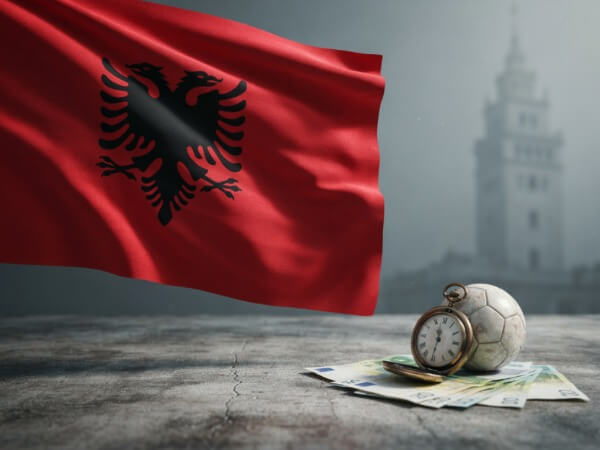
Albania is preparing to reopen its online sports betting market after seven years of prohibition, even as the country has few specialist services available for people who develop gambling problems.
The government says the legal framework is now complete. The next step is licensing.
Up to 10 online operators could eventually be approved. Retail betting shops and slot halls will remain banned, keeping the new market almost entirely digital.
The reopening follows a striking failure of the 2019 gambling ban to eliminate betting activity. Instead, wagering moved online and continued outside the regulated system.
Estimates from Gambling Compliance International put unregulated online sports betting GGR at $117 million in 2024 and $126 million in 2025. Including online casino and poker, the wider unregulated market reached about $229 million last year.
That underground market is the backdrop to Albania’s policy reversal.
A market that never really disappeared
When Albania introduced its sweeping gambling restrictions, betting was deeply embedded in everyday life. In 2018, the sector generated around €700 million in annual turnover, while roughly 4,000 betting shops operated across a country of just over 2.8 million people.
The government argued that the industry had become too widespread and carried risks linked to addiction, household finances and the integrity of sport. Concerns were also raised about possible connections between betting businesses and organised crime.
The ban closed betting shops and online gambling operations. Casinos were limited to selected five-star hotels.
It did not end demand.
By 2022, Prime Minister Edi Rama had acknowledged that online betting was still thriving despite the prohibition. The government’s argument gradually shifted from trying to suppress the activity altogether to bringing it into a taxable and supervised market.
Parliament approved legislation for a partial reopening in 2024. More than two years later, Albania has finally completed the regulations needed to put that law into practice.
The Ministry of Finance now considers the system legally ready, although applications have not yet officially opened.
A market built for larger operators
The new regime is deliberately narrow.
Only online sports betting will be allowed. Cash wagers are prohibited, and customers will have to register using a national identity card. Payments must pass through Albanian banks, licensed electronic-money institutions or authorised payment providers.
Operators will have to track transactions, retain player records for at least three years and enforce the country’s digital self-exclusion system.
The rules also allow relatives to seek gambling restrictions for family members. Operators must provide information about gambling risks and direct customers toward support services.
That last requirement exposes one of the policy’s clearest weaknesses. Albania currently has no dedicated gambling counselling or rehabilitation centre.
The government is nevertheless expecting the regulated market to generate about ALL2 billion, or roughly €20 million, in annual public revenue. Fifteen per cent of GGR is earmarked for a special fund covering areas including culture, sport, technology and innovation.
Operators will also face a 15% corporation tax rate, local taxes and a licensing charge. The licence fee starts at ALL400 million, about €4 million, and is paid over a 10-year term.
The barriers to entry are substantial.
Applicants must establish an Albanian joint-stock company, show gambling experience in at least three EU or OECD markets, record at least ALL2 billion in turnover during the previous financial year and maintain at least ALL40 million in share capital.
Licences will be awarded through a points system. The largest share of the scoring is tied to the licence fee and industry experience, with additional points for governance, technology and a three-year business plan.
Taken together, the requirements make the reopening much less accessible than Albania’s old retail betting economy.
They also point toward a market dominated by established international operators.
The regulations appear to reinforce that direction. Once the Licensing Commission decides to start the competitive process, the application notice must be published within seven days, including in two international newspapers.
The biggest question is demand
There is still no firm launch date.
Albania’s Gambling Supervision Authority confirmed in July that all eight implementing regulations had been completed. The licensing process itself has yet to begin, and authorities have not publicly settled how many of the possible 10 licences will actually be issued.
There is another uncertainty that cannot be solved through regulation.
Seven years have passed since Albanians could legally place a sports bet through a domestic operator. During that time, the market has changed, the population has declined from around 2.8 million to 2.75 million and Albania remains a relatively low-income economy.
Some industry observers believe the appetite for betting has weakened, particularly among younger generations. Others see the country’s continued informal betting activity as evidence that demand remains.
The online model may make enforcement easier. Digital payments create a transaction trail that did not exist in the same way across thousands of physical betting shops.
But the success of the reopening will depend on whether customers who have become accustomed to unregulated platforms are willing to move to licensed alternatives.
For international operators, the economics may still be attractive. Once established, an online sportsbook can serve the market without the costs associated with a nationwide retail network, while the licensing requirements remain manageable for companies with an established presence elsewhere.
Albania is therefore reopening betting under very different conditions from those that existed before the ban.
The old betting-shop economy is not coming back. The new one will be smaller, digital and heavily filtered at the licensing stage.
What happens next will show whether Albania has actually brought betting under control — or simply changed where the market operates.
Source: balkaninsight.com